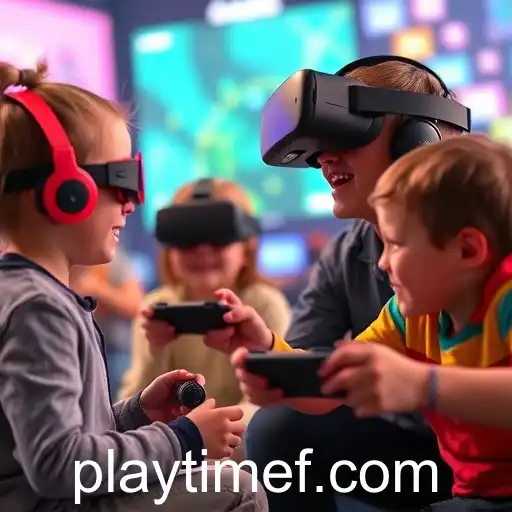
playtime | Unlocking Learning Potential: The Impact of Educational Games on Playtime

In today's digital era, the fusion of playtime and education represents a transformative approach to learning. Educational games, increasingly popular among parents and educators, leverage the natural appeal of gaming to instill educational content in children. As children engage with these games, they unknowingly acquire knowledge and develop critical skills that extend beyond traditional academic boundaries.
The term 'playtime' traditionally conjures images of carefree activities centered on recreation and imagination. However, the introduction of educational games has evolved this concept into an interactive tool for meaningful learning. These games are meticulously designed to captivate the attention of young learners while subtly embedding lessons in subjects ranging from mathematics to language arts. By incorporating experiential play, they ensure that education is not separate from enjoyment.
One of the significant benefits of educational games is their ability to adapt to varied learning paces and preferences. Adaptive learning technology allows games to tailor challenges and content to the individual's needs, ensuring a personalized learning path. This flexibility is crucial in catering to different learning styles, making education more accessible and less intimidating for every student.
Moreover, educational games promote critical thinking, problem-solving, and decision-making skills. Many games require players to strategize, plan, and think ahead, indirectly honing their cognitive abilities. This process of learning by doing, supported by immediate feedback mechanisms, solidifies knowledge retention and application in real-world scenarios.
The social aspect of gaming is another layer adding to its educational value. Multiplayer settings in educational games encourage cooperation, teamwork, and communication, skills essential for personal and professional success. Shared goals and collaborative problem-solving tasks simulate social dynamics that children will encounter beyond the screen.
Educational games also introduce children to digital literacy from an early age. Navigating interfaces, understanding digital narratives, and solving technology-based challenges empower children to become competent digital citizens. Thus, educational games serve as a bridge connecting children with the digital world they are growing up in.
However, the role of parental and educator guidance remains vital. While educational games are rich in potential, oversight ensures that content is age-appropriate, aligns with educational goals, and limits screen time to prevent overexposure.
In conclusion, educational games are reshaping playtime into a powerful medium for learning. By embracing play as a vehicle for education, we open up an engaging pathway where curiosity is nurtured, and learning is a continuous adventure. As technology advances and educational methodologies evolve, the symbiotic relationship between play and learning will undoubtedly play a key role in the educational landscapes of the future.
Playtime Revolutionizes Online Gaming in 2025
Explore how Playtime is transforming the online gaming scene in 2025 with innovative trends and dynamic content.
Revolutionizing Online Gaming in 2025
Explore how 'playtime' has evolved in 2025, influencing online gaming with advanced technology and new dynamics.
The Evolution of Online Playtime: More Than Just Fun
Exploring how 'playtime' on English game websites has evolved in response to current events and technological advancements.
Digital Playtime Revolution in 2026
Exploring the evolution of gaming and its impact on society in 2026.